by Miranda Hudson-Travis
When I discovered our school’s adult program, I found a community that included dancers who were over twice my age. I admired them, and each week, I looked forward to learning and dancing with them. As I embraced having the means to learn Irish dance, I quickly realized that I not only loved learning it, loved doing it, loved sharing it, and loved being in our McTeggart community—but that I was also thrilled by the possibility that decades into the future, I could still be an Irish dancer.
But after a few years, I had a damaging misdiagnosis, anxiety that transformed into the most painful and unfamiliar grief that I’ve experienced, my first need to fiercely advocate for myself in our healthcare system, my first experience with chronic pain . . . ; a surgeon held my ankles, looked up, and asked if I had any questions, and I had one: would I be able to dance again?
Their answer was, “Maybe.”
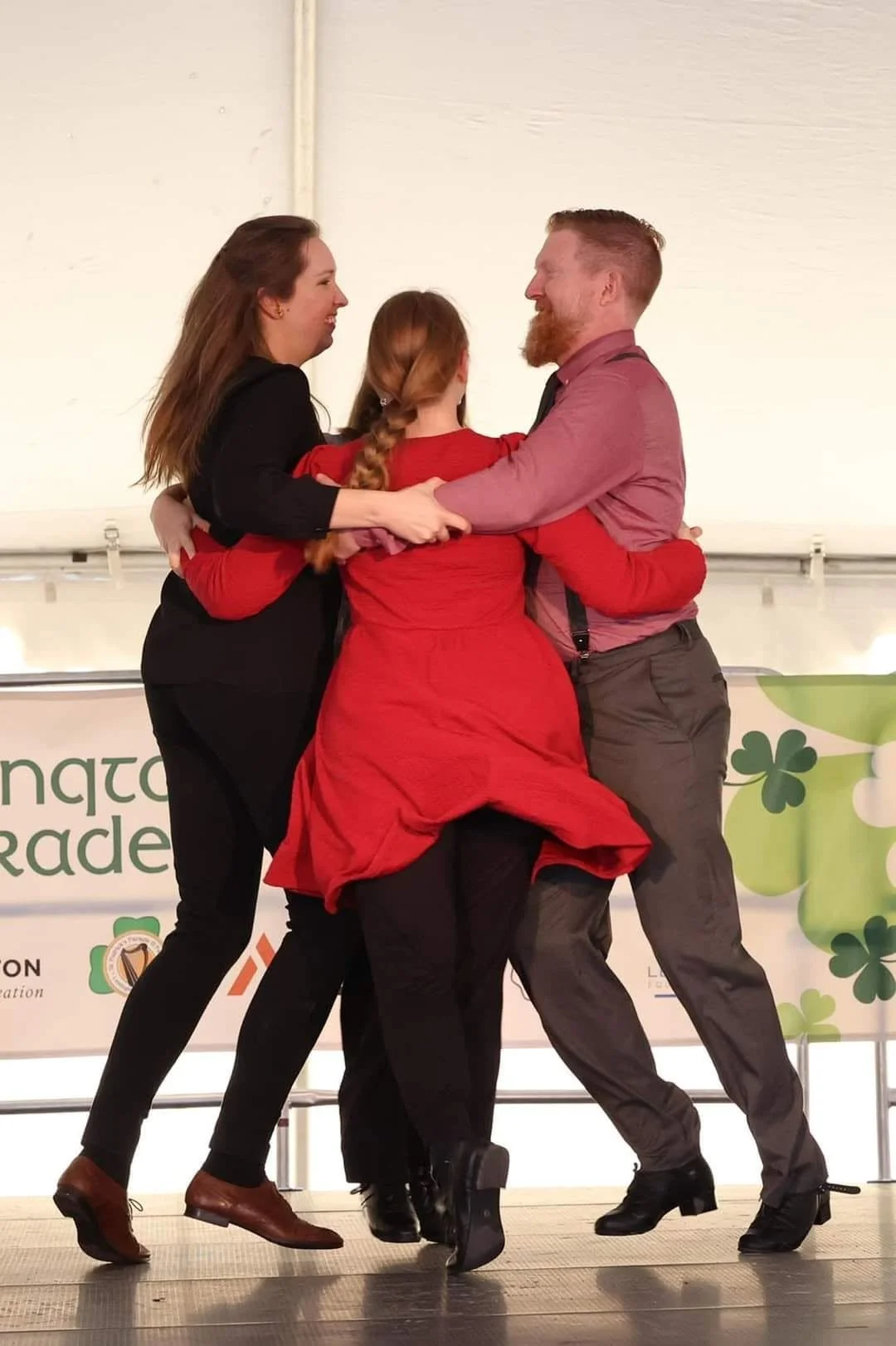
Miranda and friends dancing a "Christmas" (also known as a "swing four" or "basket" in various dance traditions) at the Lexington St. Patrick's Day Festival
I then had months of recovery and various treatments, one of which was having classes for sean-nós dance, which is an Irish-dance style that’s physically exerting yet can be low-impact—well, as low-impact as Irish dance can be. Perhaps surprisingly, I began having those classes begrudgingly, because I had misconceptions about sean-nós dance. It’s often described as being casual and indeed low-impact; partly as a result, I associated it with easiness, little athleticism, and limited performance opportunities, and as someone who enjoyed challenges in Irish dance and sharing it, my misconceptions overcame interest that I might’ve had. Sean-nós dance seemed fitting only because I hoped to strengthen myself enough to return to parts of the Irish-dance world that I missed.
Though my enjoyment of sean-nós dance didn’t begin suddenly, sean-nós dance was fitting; I began to see that some of its usual descriptions are inaccurate. There are complicated sean-nós dance steps; there are sean-nós dance competitions and televised sean-nós dance performances; there’s significant variety in how intensely sean-nós dance is done; and I think that to many, some of its difficulty and characteristics aren’t obvious. They can be in shifting weight, listening instead of counting, using the differing timbres of a “heel” and “toe,” expressing the same dynamics as those of a tune that’s being played, and noticing a musician’s nod. My atrophy—and naïveté—diminished more and more while I observed more and more.
I also learned that I’m interested in sean-nós dance’s history (especially the theorized origins of sean-nós dance, its connection with folklore and traditions, and sean-nós dance’s ancient usage), but I felt most passionate as a sean-nós dancer after learning how colonialism and nationalism made sean-nós dance be relatively rare.
I had the saddening realization that they were why I had misconceptions, and I had the stirring realization that a revival in my life was coinciding with a revival of sean-nós dance.
It’s been such a joy to be a part of that revival, which has been occurring here, in Ireland, and elsewhere. And on this path that’s new to me and old to generations of others, I’m again thrilled by the possibility that decades into the future, I could still be an Irish dancer.
*****
At McTeggart, we have offer classes in Sean Nós and Set Dancing for youth and adults. Check out a free trial class! Questions? Call or text 859-444-4JIG.
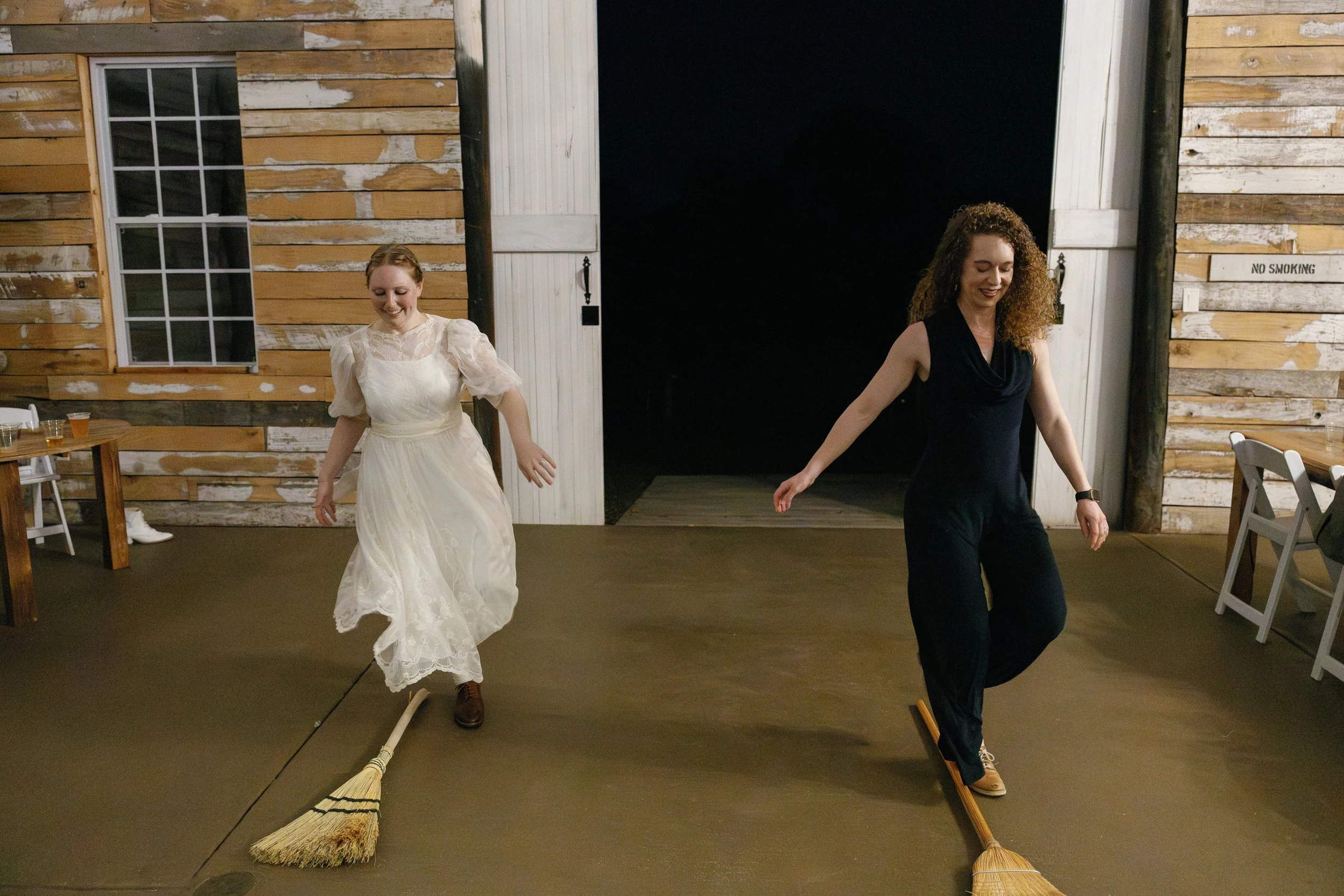
Miranda and her teacher Allison performing a Sean Nós brush dance at Miranda and her husband Jim’s wedding reception